A canonical amount that is not present
The first working draft used Kestrel's sales orders as the feature-resolution example. The authentic runs uncovered a modelling fact: canonical SalesOrder currently has no canonical counterparty feature or relationship that can establish which orders belong to Kestrel. The guide does not fabricate that link to preserve a nicer demo, and uses a specific canonical Sales Order instead.
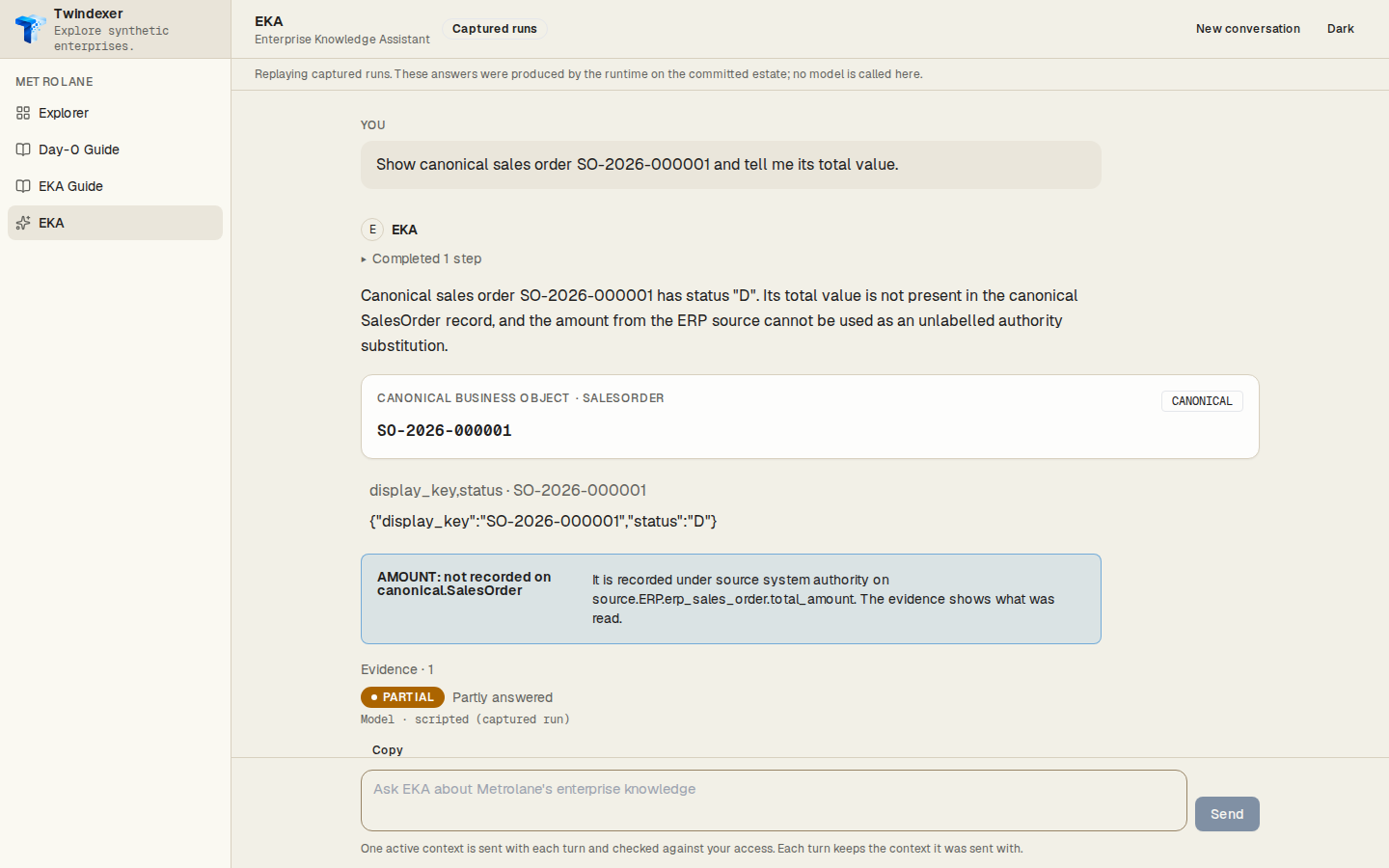
Show canonical sales order SO-2026-000001 and tell me its total value.
- Result
- PARTIAL
- Tool calls
- 1
- Evidence
- 1
- Duration
- 4.0s
The user asks for canonical sales order SO-2026-000001 and its total value. According to the schema rules, canonical.SalesOrder does not carry an AMOUNT feature; therefore, the value is not available canonically.
Part p1
Show canonical sales order SO-2026-000001
required: KEY, STATUS
step: list_records

Part p2
tell me its total value
required: AMOUNT
no read step
The second part has no tool step because the requested canonical feature is not present.
The alternate is named from governed registry metadata, but EKA does not read that source value merely to make the canonical answer look complete.
Only one enterprise read was needed. The returned canonical evidence establishes SO-2026-000001 status = "D". D remains the raw recorded code because no authoritative reviewed label exists for it.
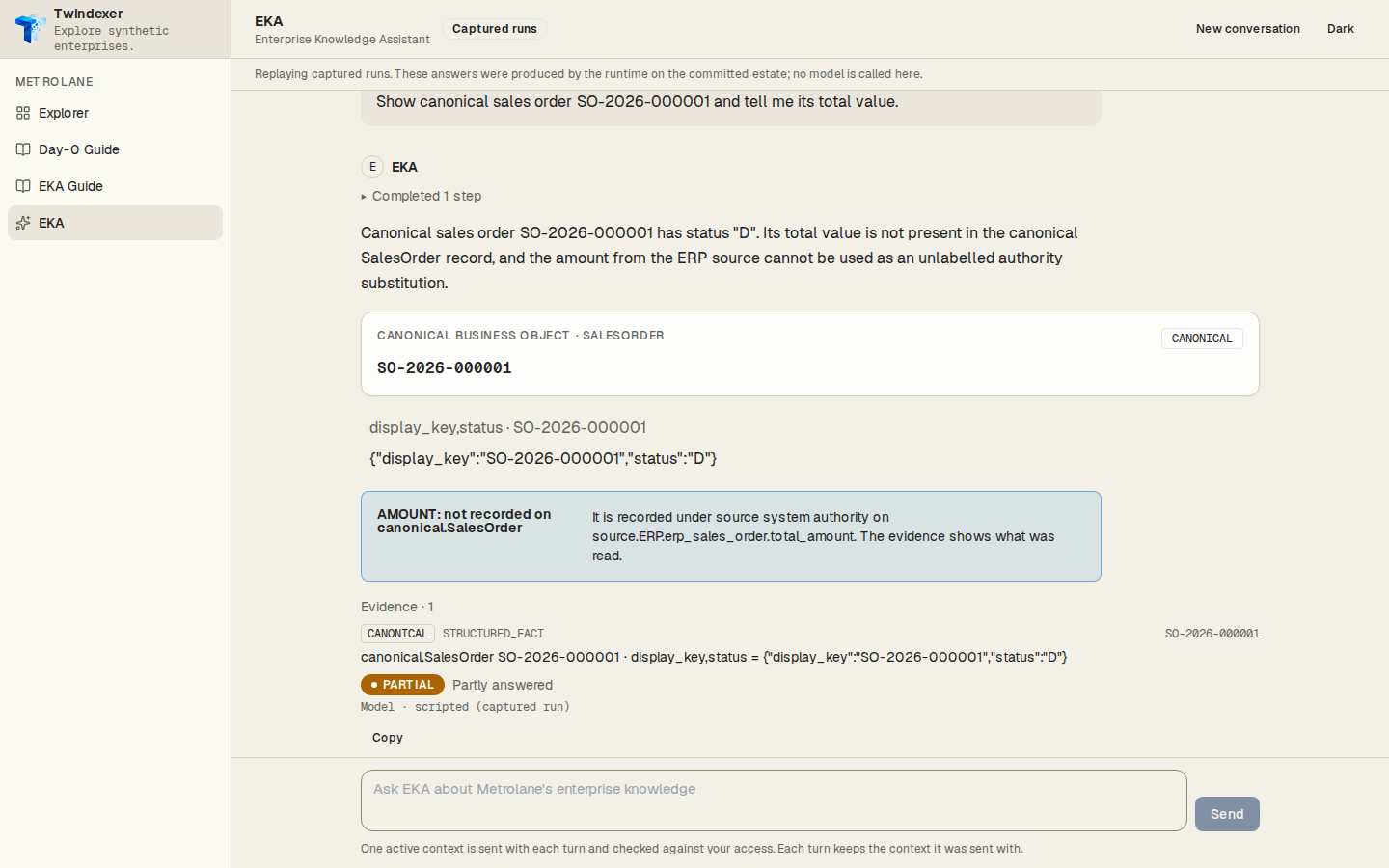
canonical.SalesOrder SO-2026-000001: display_key, status = {"display_key":"SO-2026-000001","status":"D"}.
Canonical sales order SO-2026-000001 has status "D".
ESTABLISHEDEVD-FACT-768ce3e4
The total value for canonical sales order SO-2026-000001 is not present.
NOT_ESTABLISHEDnone cited — AMOUNT's absence is the runtime's feature resolution, not an evidence item
“available elsewhere” ≠ “silently use it”
PARTIAL
Show the order — fulfilled. Tell me its canonical total value — cannot be fulfilled.
Canonical sales order SO-2026-000001 has status "D". Its total value is not present in the canonical SalesOrder record, and the amount from the ERP source cannot be used as an unlabelled authority substitution.
Canonical sales order SO-2026-000001 is present with raw status code D. Its total value is not present on the canonical SalesOrder. ERP records a source-side total_amount, but EKA did not read it in place of the requested canonical amount.
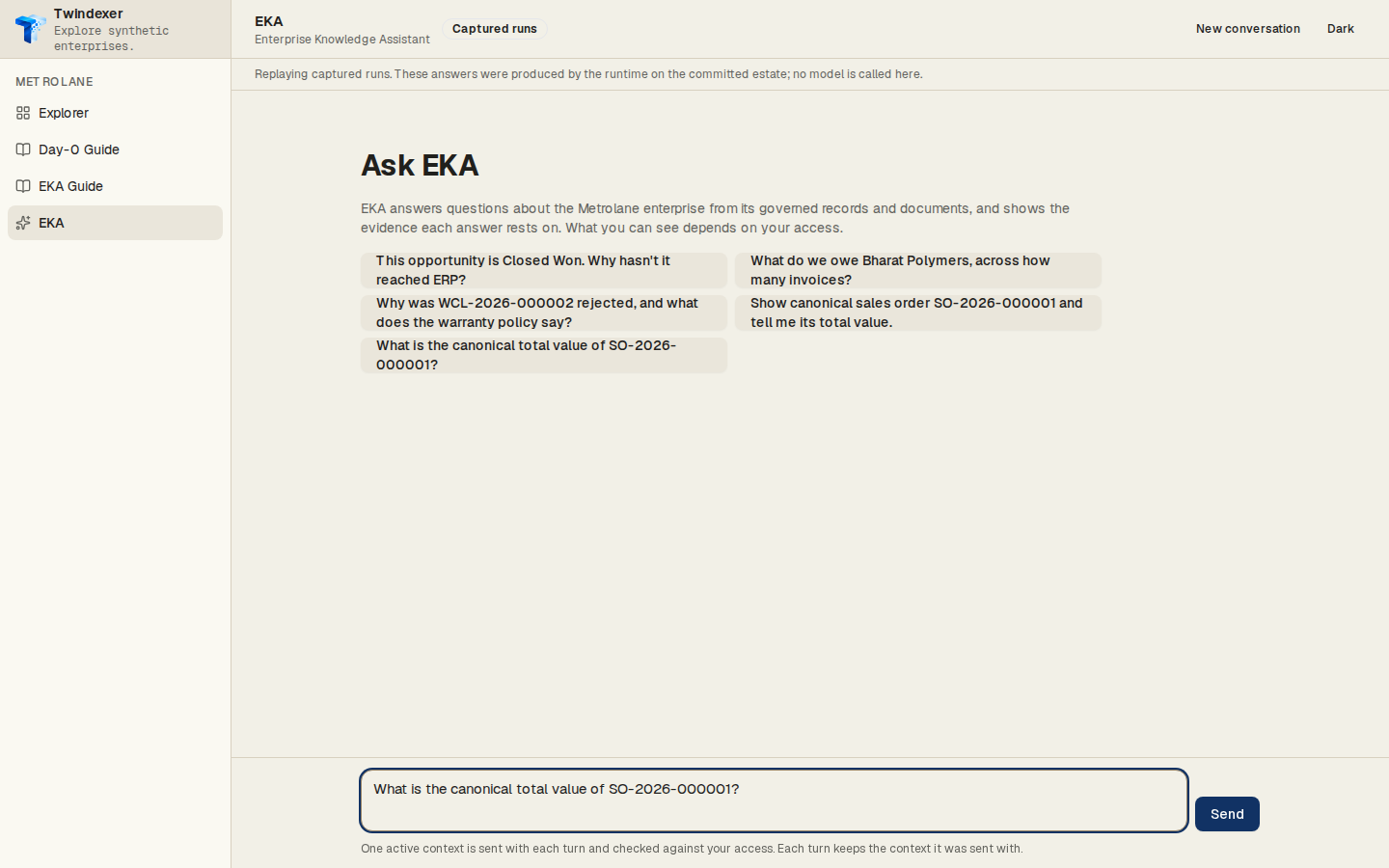
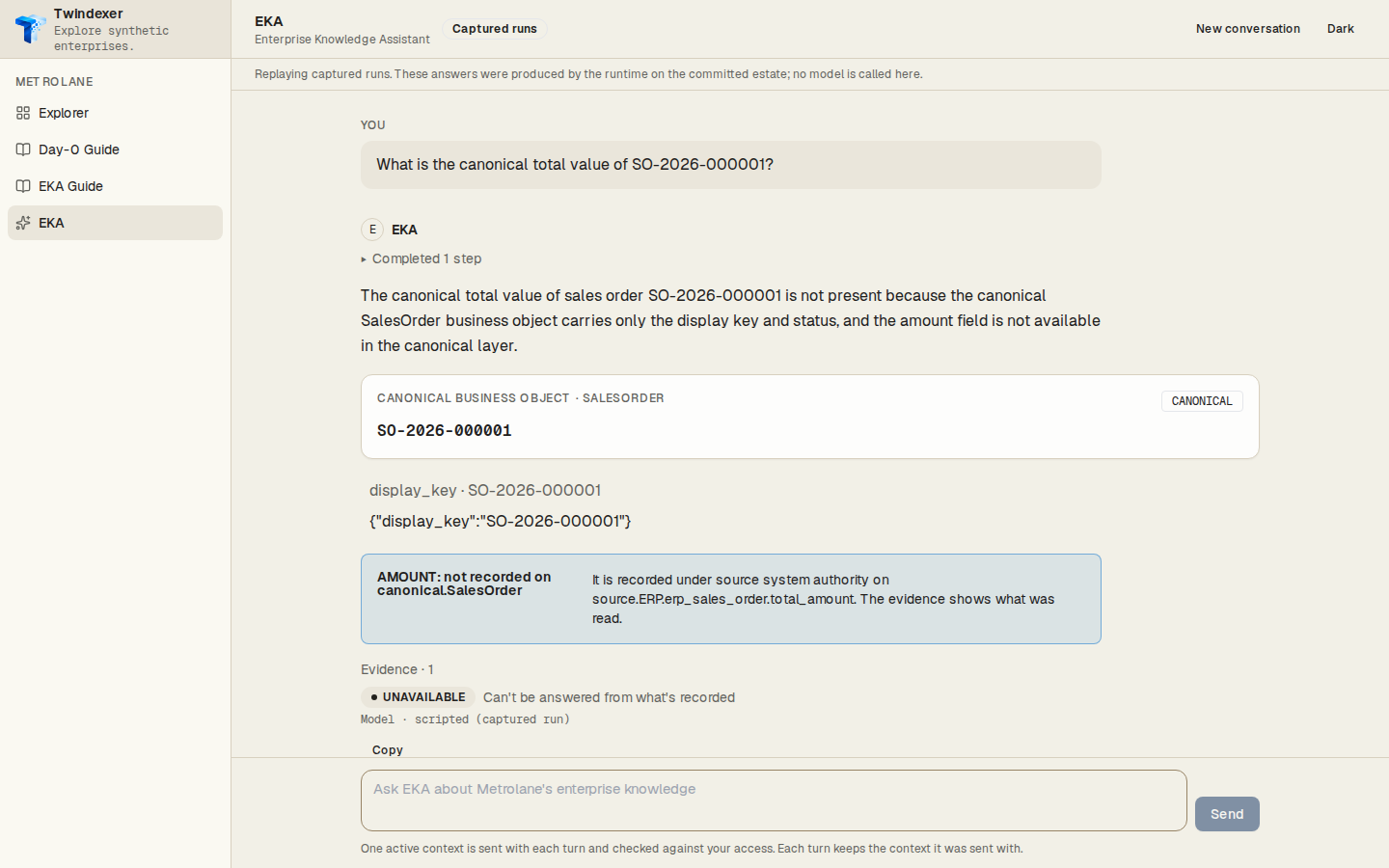
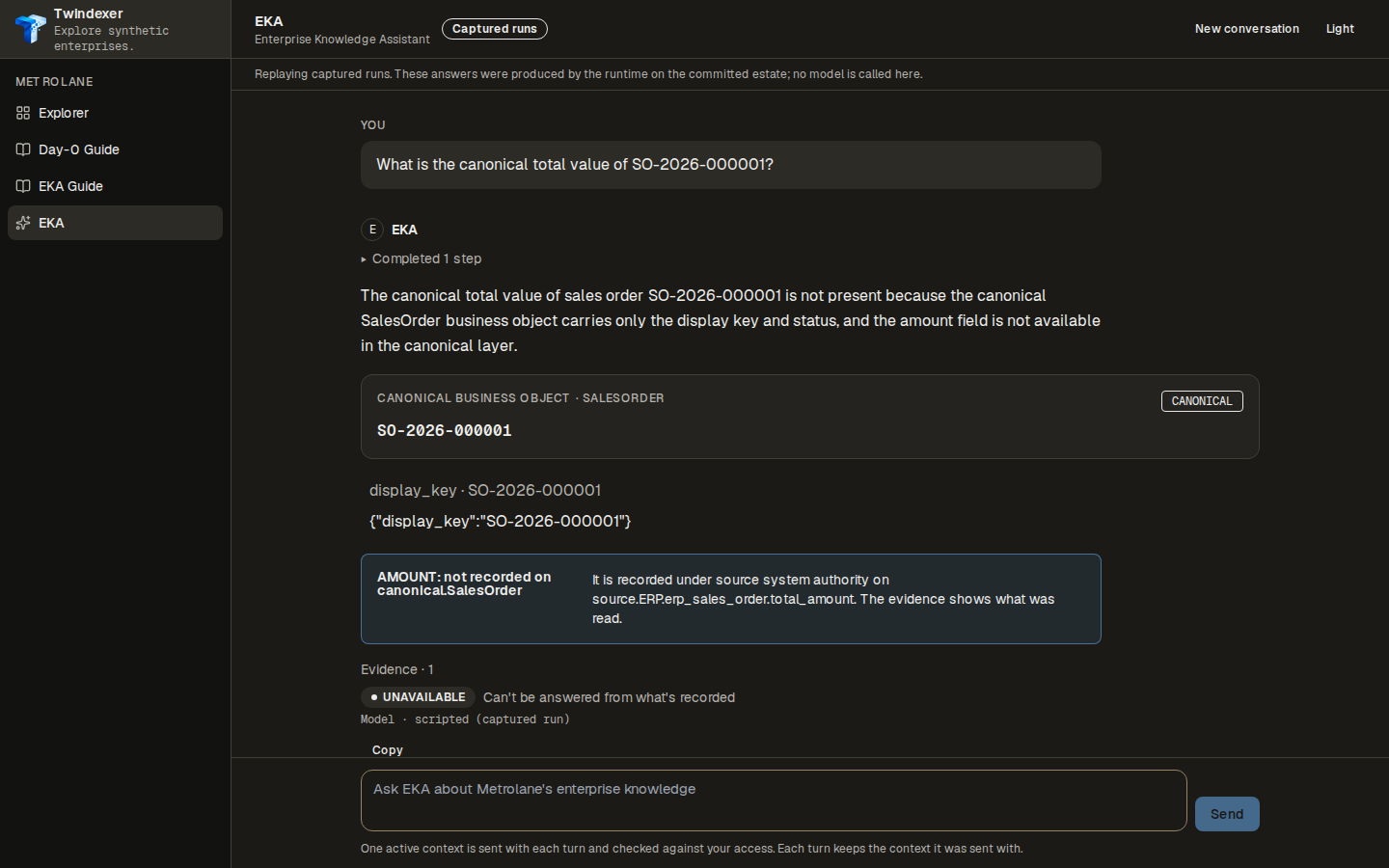
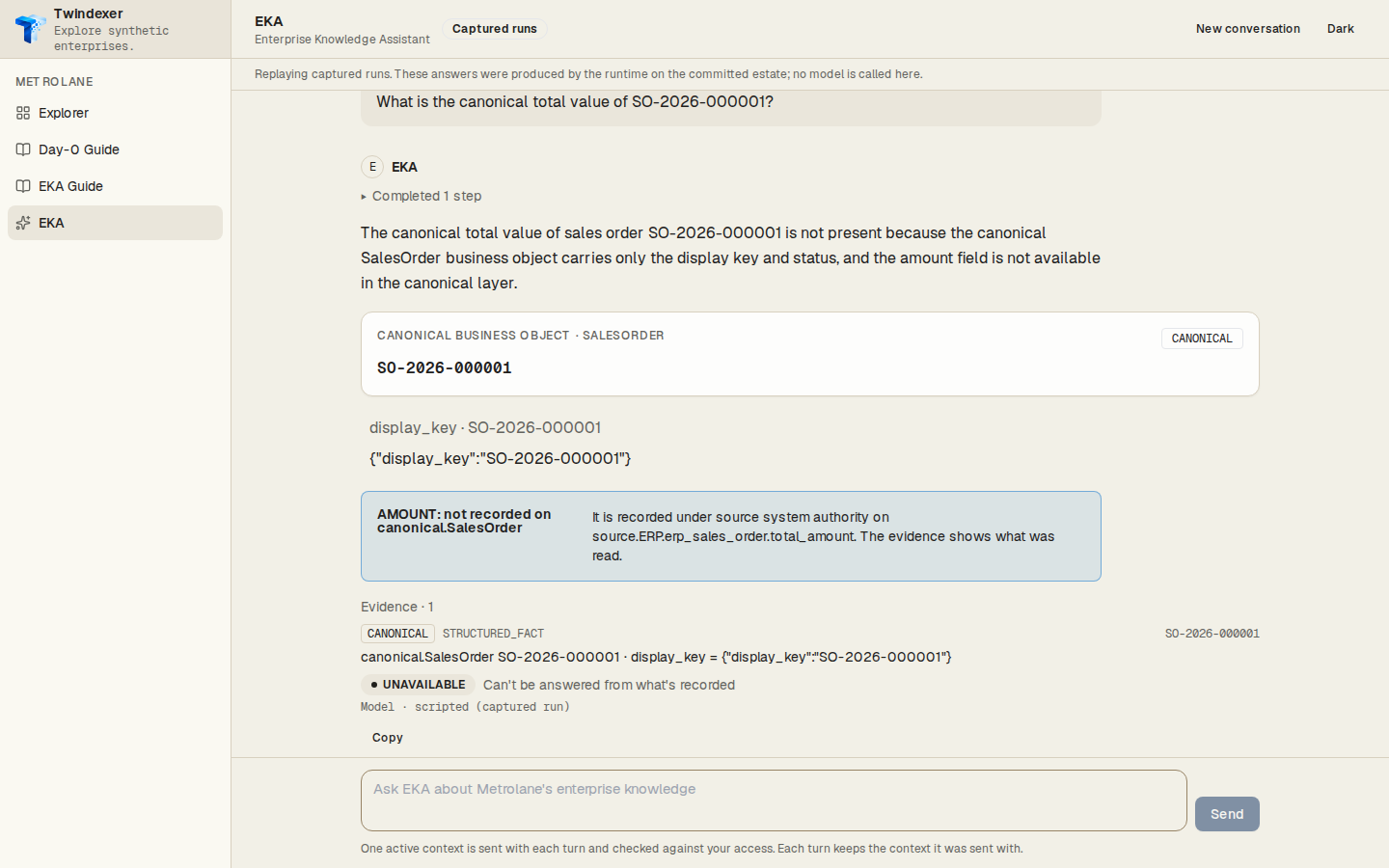
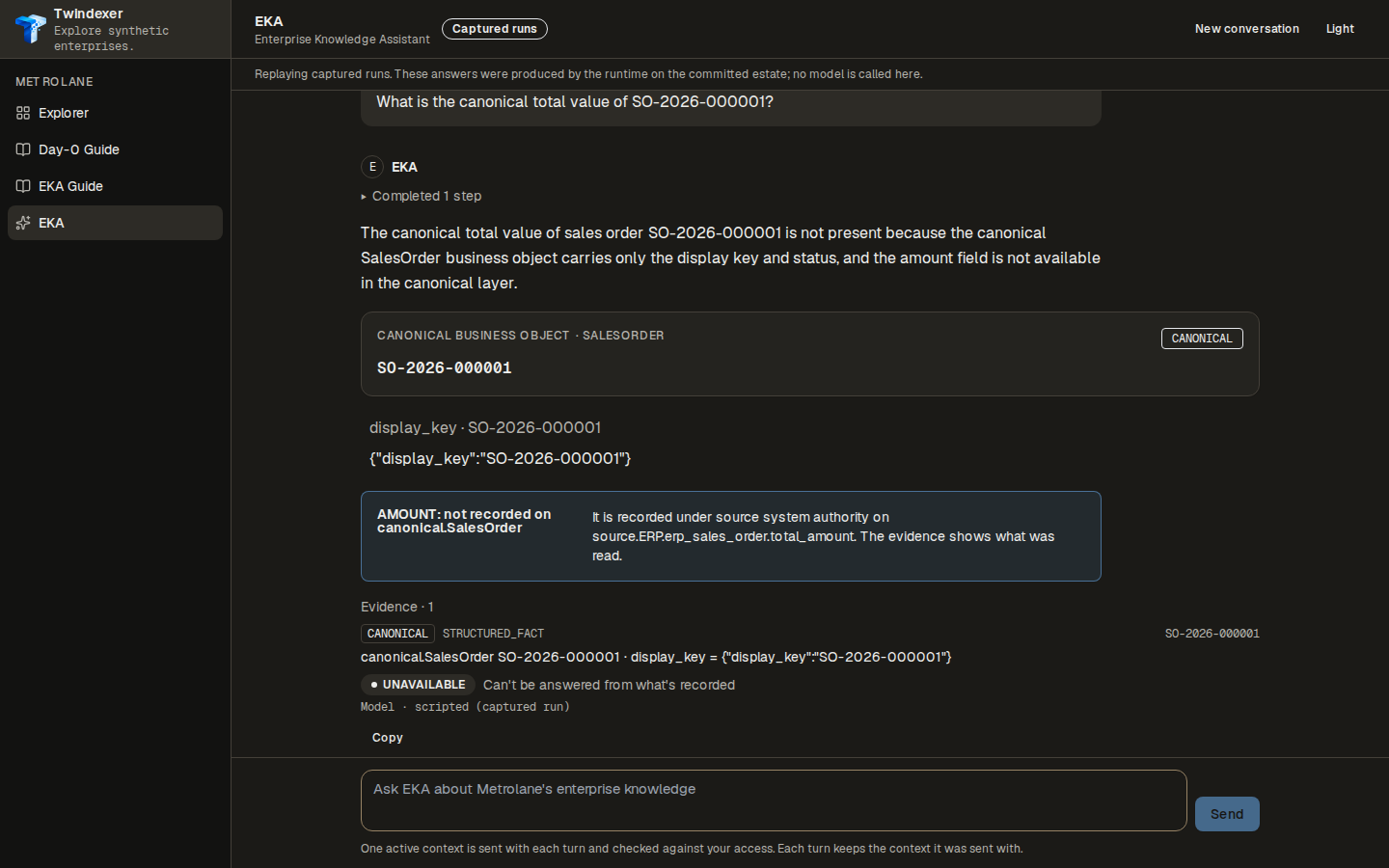
What is the canonical total value of SO-2026-000001?
This question asks for only the unavailable feature.
The one requested part plans no read: the runtime knows from the governed subject registry that the requested canonical feature is not represented there. The plan's single step, list_records, only confirms the order exists canonically; it belongs to no part, so it is a means rather than an answer. 1 tool call and 1 evidence item, and the request is still UNAVAILABLE.
The canonical total value of sales order SO-2026-000001 is not present because the canonical SalesOrder business object carries only the display key and status, and the amount field is not available in the canonical layer.
The canonical total value is unavailable because AMOUNT is not present on canonical SalesOrder. ERP records a source-side total_amount, but that alternate authority was not used for this canonical-only request.
- Run ID
- RUN-d77b5294-6324-44a1-a429-974a1d7b1ee7
- Result
- UNAVAILABLE
- Tool calls
- 1
- Evidence items
- 1
- Model calls
- 2
- Duration
- 3.4s
Question:
"Which canonical Sales Orders belong to Kestrel?"

Current canonical answer:
cannot be established from canonical SalesOrder,
because COUNTERPARTY is NOT_PRESENT there.
The earlier Kestrel version of this example is now a small negative modelling lesson. That is a better representation of the estate than manufacturing a customer relationship for demonstration purposes.
Together with the narrower companion question, this pair shows why feature availability and overall answer status are different concepts: order available and amount unavailable gives PARTIAL, while an unavailable amount as the entire request gives UNAVAILABLE.
- Run ID
- RUN-9b7e7850-5044-4e5a-a23b-ad890bd9fe40
- Result
- PARTIAL
- Model
- google:gemini-3.5-flash-lite
- Prompt
- PROMPT-EKA-0.4.6
- Planner hash
- 0fb08227cf1e04d7…
- Synthesis hash
- 2e56d7b0237722db…
- Build
- 093d195bbb15…
- Business now
- 2026-07-31 18:30:00+00
- Tool calls
- 1
- Evidence items
- 1
- Model calls
- 2
- Duration
- 4.0s
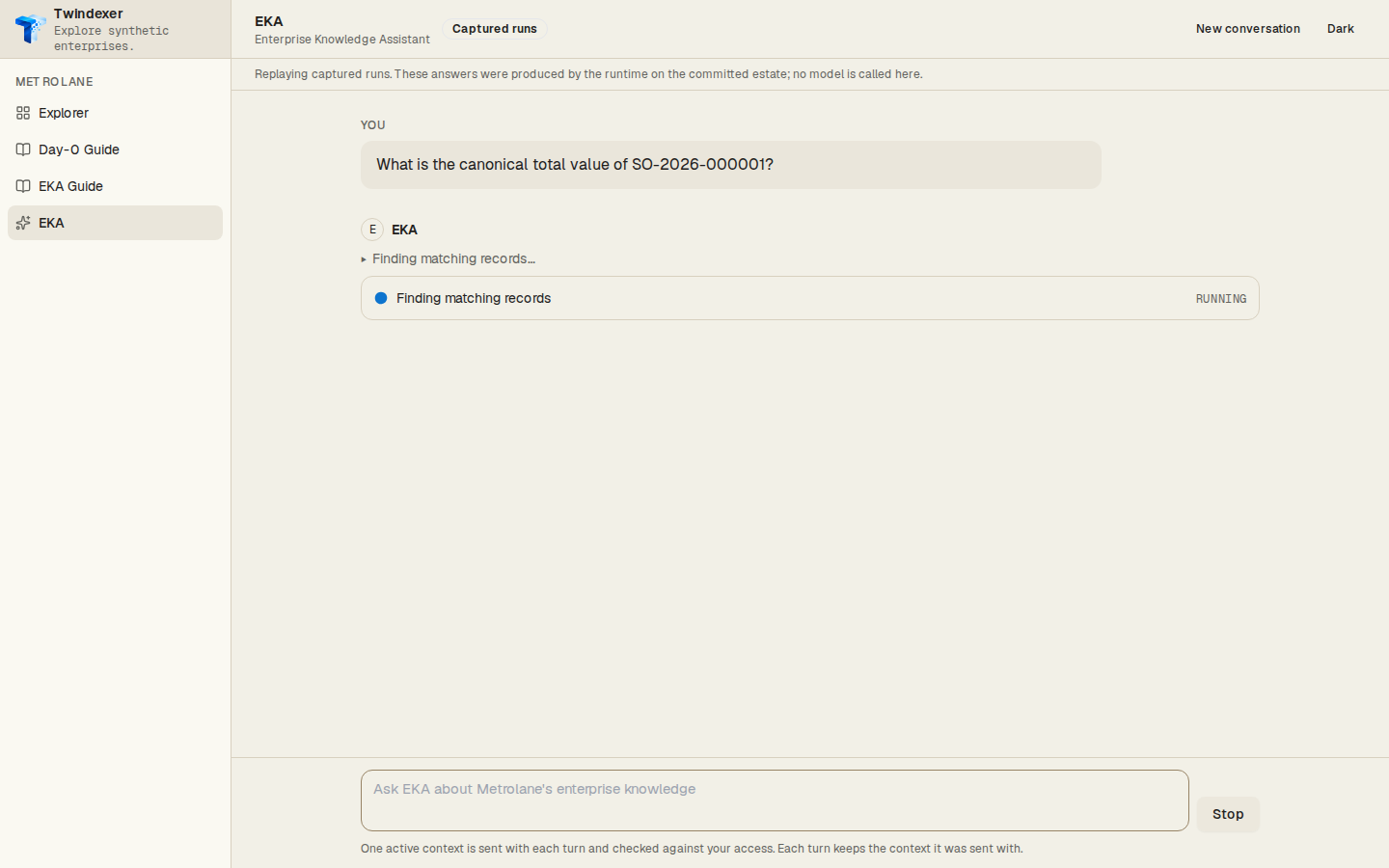
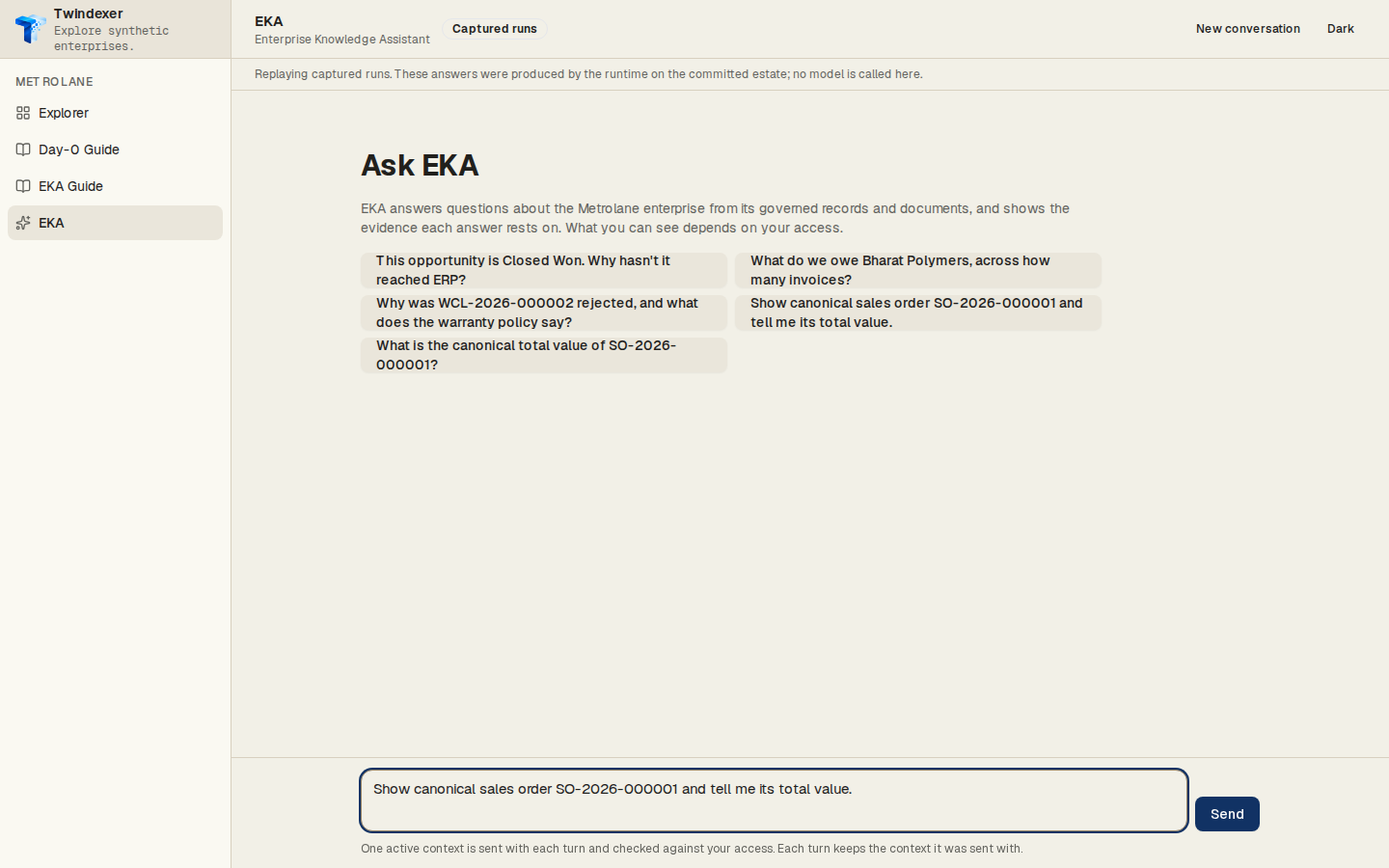
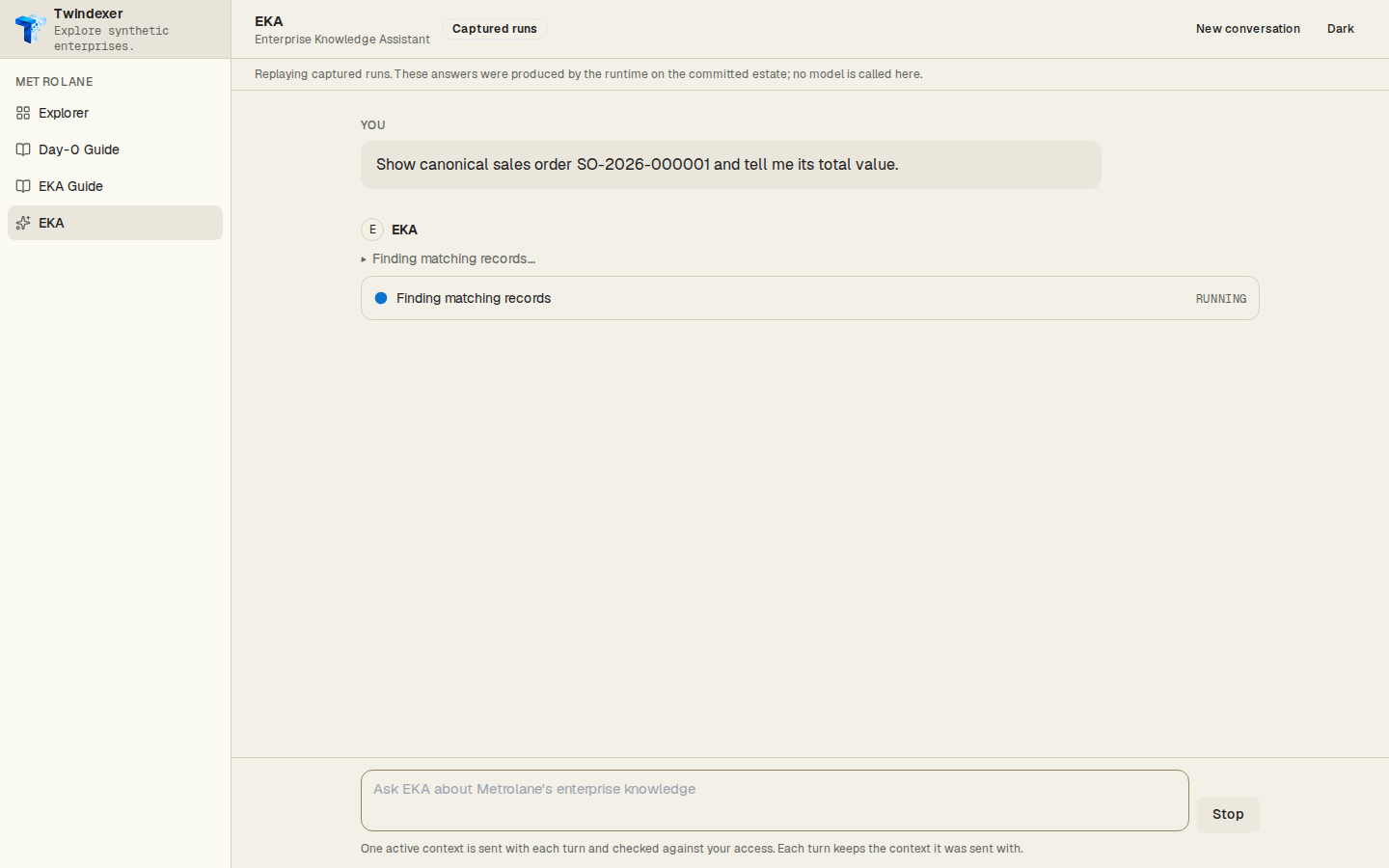
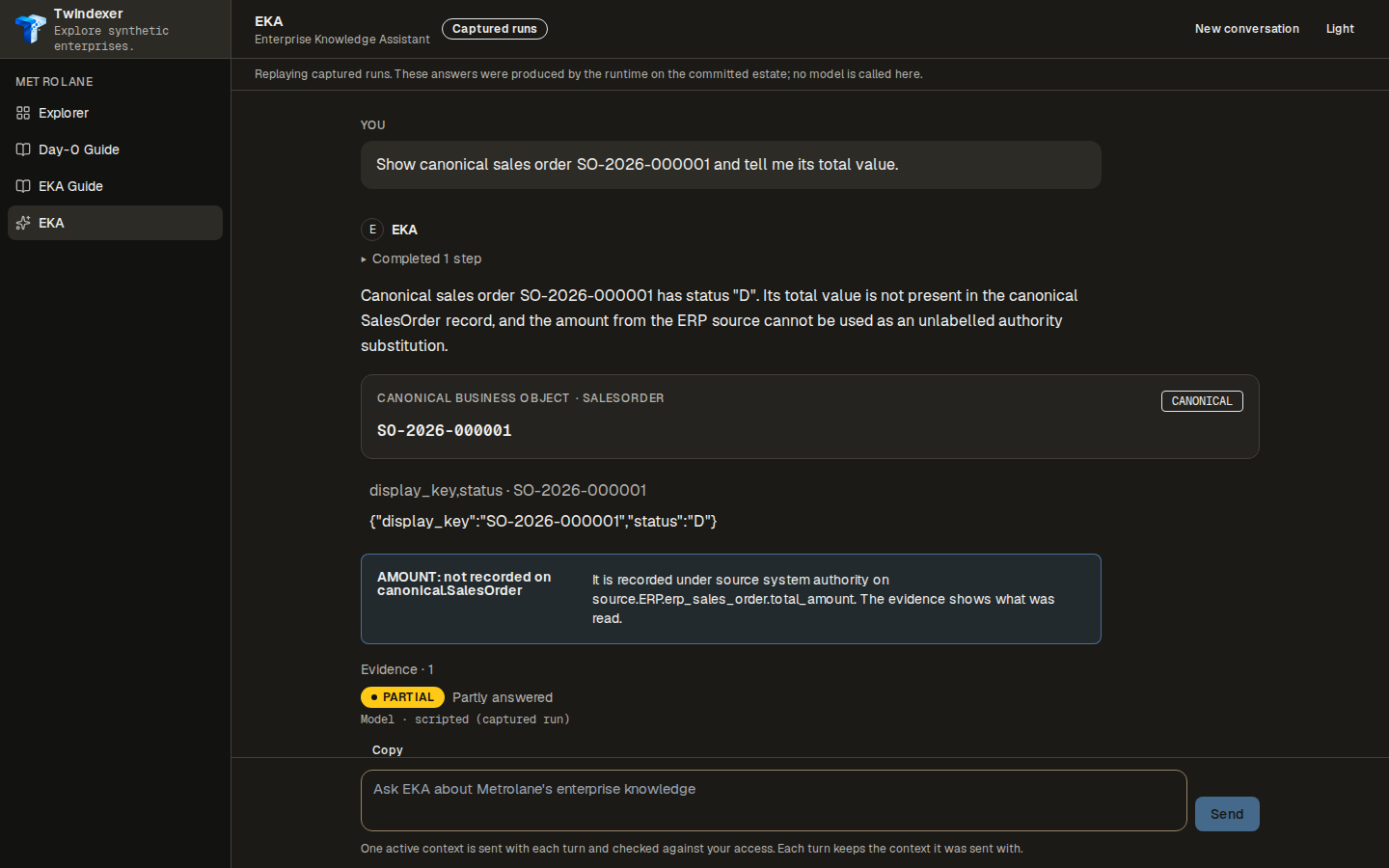
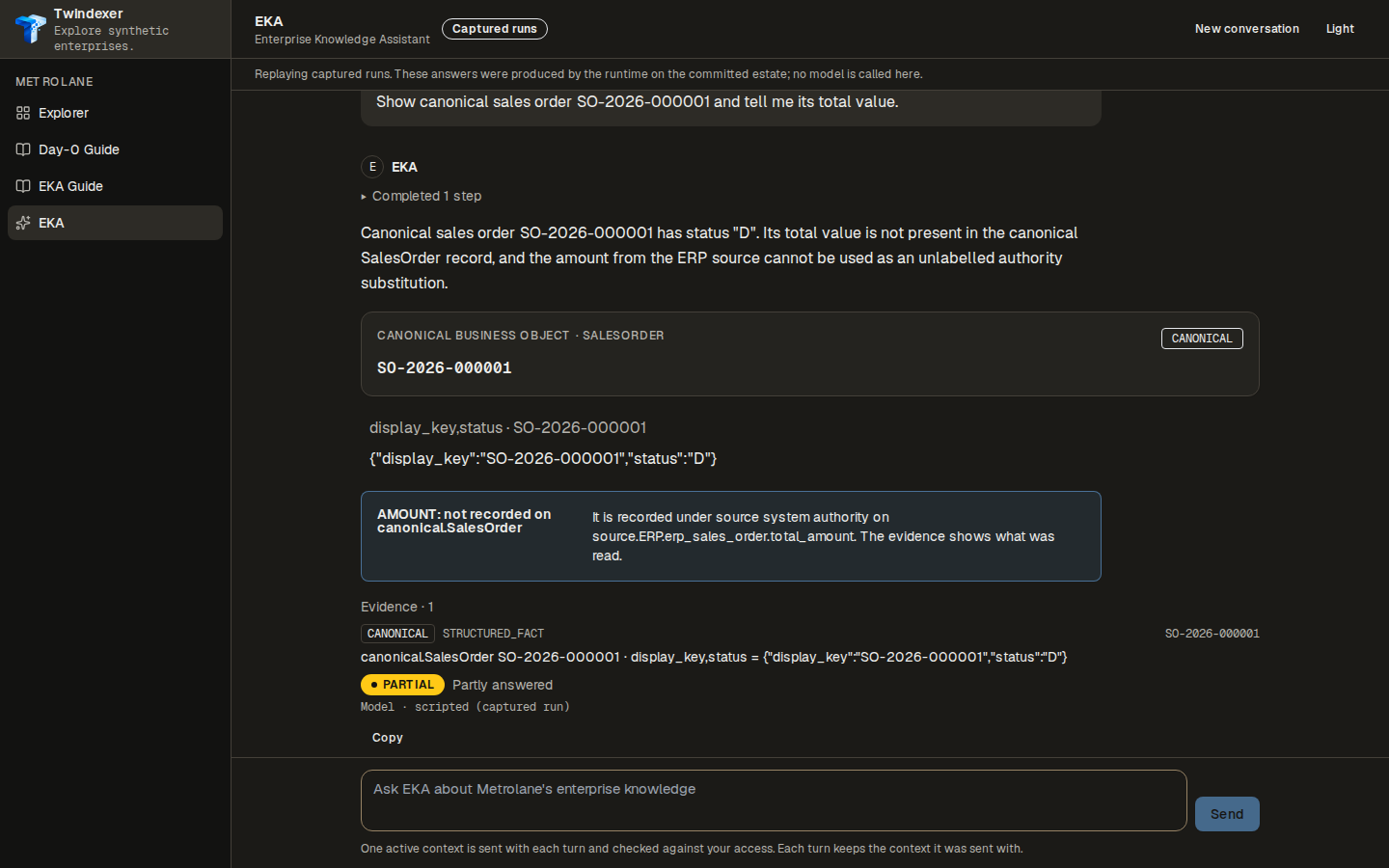
The EKA Workspace replaying this chapter's own captured run. No model is called in replay: what is on screen is the run described above, as the runtime returned it.
Transcript
- The question is typed and sent:
Show canonical sales order SO-2026-000001 and tell me its total value.
- The activity rail runs, then the answer arrives with its result: PARTIAL.
- The answer reads:
Canonical sales order SO-2026-000001 has status "D". Its total value is not present in the canonical SalesOrder record, and the amount from the ERP source cannot be used as an unlabelled authority substitution.
- The steps are opened: Finding matching records · Writing the answer.
- The evidence is opened: 1 item.
- The view returns to the answer.
Transcript
- The question is typed and sent:
What is the canonical total value of SO-2026-000001?
- The activity rail runs, then the answer arrives with its result: UNAVAILABLE.
- The answer reads:
The canonical total value of sales order SO-2026-000001 is not present because the canonical SalesOrder business object carries only the display key and status, and the amount field is not available in the canonical layer.
- The steps are opened: Finding matching records · Writing the answer.
- The evidence is opened: 1 item.
- The view returns to the answer.